
Avoid knee pain when running is one of the biggest worries for beginners, especially when you’re just starting out and trying to stay consistent. One week you’re feeling motivated after a parkrun or evening jog, and the next your knees are grumbling every time you walk down the stairs. Not exactly ideal.
The good news is that most running-related knee pain can often be avoided with a few simple habits. You don’t need expensive gadgets or marathon-level training plans, just a bit of patience, decent trainers, and knowing when to slow down. Your knees will thank you for it later.
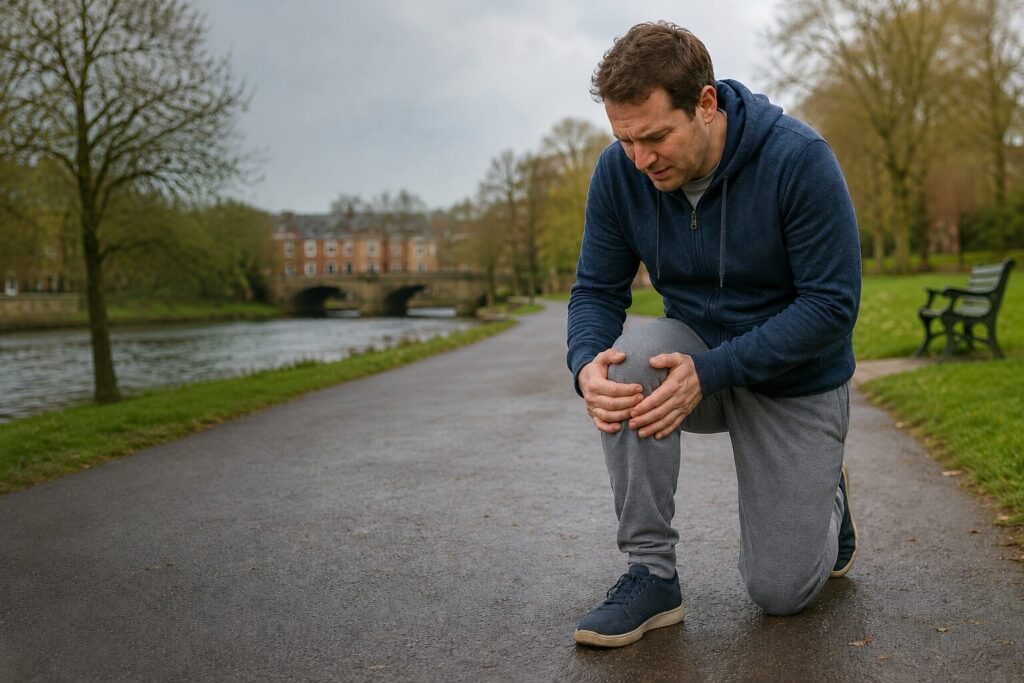
How to Avoid Knee Pain When Running
Start Slower Than You Think You Need To
One of the biggest causes of knee pain running issues is simply doing too much too soon. It’s very tempting to feel motivated and suddenly decide you’re going to run 5k every evening. Your knees, however, may not share your enthusiasm.
Your body needs time to adapt to the impact of running. Muscles strengthen fairly quickly, but joints and tendons take longer.
A good beginner approach is:
- Run 2–3 times per week
- Mix running and walking
- Increase distance gradually
- Rest between runs
The old “too much, too soon” problem catches out loads of runners in the UK every year, especially around January when everyone gets inspired after the holidays.
Slow progress is still progress.
Wear Proper Running Trainers
Cheap or worn-out trainers can make running feel much harder on your knees.
You don’t necessarily need the fanciest pair in the shop, but you do want trainers designed for running rather than general gym use. Proper support and cushioning can make a surprising difference.
If possible, visit a proper running shop and get advice on fit. Many UK running shops offer simple gait checks without making it feel overly serious.
A few signs your trainers may need replacing:
- Soles look uneven
- Cushioning feels flat
- Knees ache after short runs
- You’ve had them for years “just sitting in the cupboard”
Classic British habit, that one.
Warm Up Before You Run
A proper warm-up doesn’t need to take ages.
Even five minutes helps prepare your knees and muscles for movement. Going from sitting at your desk all day straight into a fast run is usually where problems begin.
Try:
- Brisk walking
- Leg swings
- Gentle lunges
- Calf raises
- Slow jogging
Think of it as waking your body up rather than trying to smash a workout before the workout.
How to Avoid Knee Pain When Running With Better Form
You don’t need perfect Olympic-level running form, but a few small adjustments can reduce pressure on your knees.
Keep Your Steps Shorter
Overstriding, landing with your foot too far in front, often increases impact on the knees.
Instead:
- Take slightly shorter steps
- Keep a steady rhythm
- Land softly rather than heavily
Don’t Tense Your Upper Body
Many beginners run looking like they’re preparing for battle against the British weather.
Relax your:
- shoulders
- hands
- jaw
Running should feel controlled, not like a panic sprint for the last train home.
Strength Training Helps More Than People Realise
Strong legs help protect your knees.
You don’t need complicated gym routines either. Simple exercises done consistently can improve stability and reduce strain while running.
Good beginner-friendly exercises:
- Squats
- Glute bridges
- Step-ups
- Calf raises
- Wall sits
Even 15–20 minutes twice a week can help.
This is especially important if you sit most of the day, which many of us do now.
Running Surfaces Matter
Hard pavements can feel tougher on your knees compared to softer surfaces.
If possible, mix up where you run:
- local parks
- grass
- trails
- running tracks
- quieter paths
A lot of UK runners enjoy parkrun partly because softer paths can feel kinder on the joints than endless pavement running.
That said, don’t stress about finding the perfect surface. Consistency matters more.
Don’t Ignore Recovery Basics
The boring advice usually works best.
Simple things genuinely help:
- sleep properly
- drink enough water
- stretch after runs
- eat balanced meals
- avoid running every single day
If recovery is poor, little aches often build into bigger problems.
You may also find our guide on nutrition helpful here:
AI Nutrition Guide by CoreFitSpot
When to Get Professional Advice
If knee pain:
- lasts more than a few weeks
- gets worse while running
- causes swelling
- affects walking
it’s worth speaking with a physio or GP.
The NHS also has useful advice on knee pain and exercise recovery:
NHS Knee Pain Advice
There’s no prize for struggling through pain just to prove a point.
Leave a Reply